MichaelArell.com
  • Home
  • About
  • Blog
  • Buy
    • Christmas- Music for solo piano
    • St. Mary's Choir Favorites
    • SLIM Original Soundtrack
    • SLIM >
      • SLIM- Accolades
      • SLIM- Letter To The Viewer
      • SLIM- Behind The Scenes
    • Why Are Comedy Films So Critically Underrated?
    • Disorder In The Court
  • Donate
  • Contact
  • Home
  • About
  • Blog
  • Buy
    • Christmas- Music for solo piano
    • St. Mary's Choir Favorites
    • SLIM Original Soundtrack
    • SLIM >
      • SLIM- Accolades
      • SLIM- Letter To The Viewer
      • SLIM- Behind The Scenes
    • Why Are Comedy Films So Critically Underrated?
    • Disorder In The Court
  • Donate
  • Contact
Search by typing & pressing enter

YOUR CART

Self-Directing

film director, independent film, movie making, support independent film, film history, music history, music theory, comedy movie
Thank you for visiting my blog!
Here I share what I have learned about my passions--teaching, music, and film.
Use the categories and archives features to sort posts.
Let me know what you think [email protected]
Categories

All Film Music Profiles Teaching

Archives

August 2021
July 2021
June 2021
May 2021
April 2021
March 2021
February 2021
January 2021
December 2020
November 2020
October 2020
September 2020

1/25/2021 0 Comments

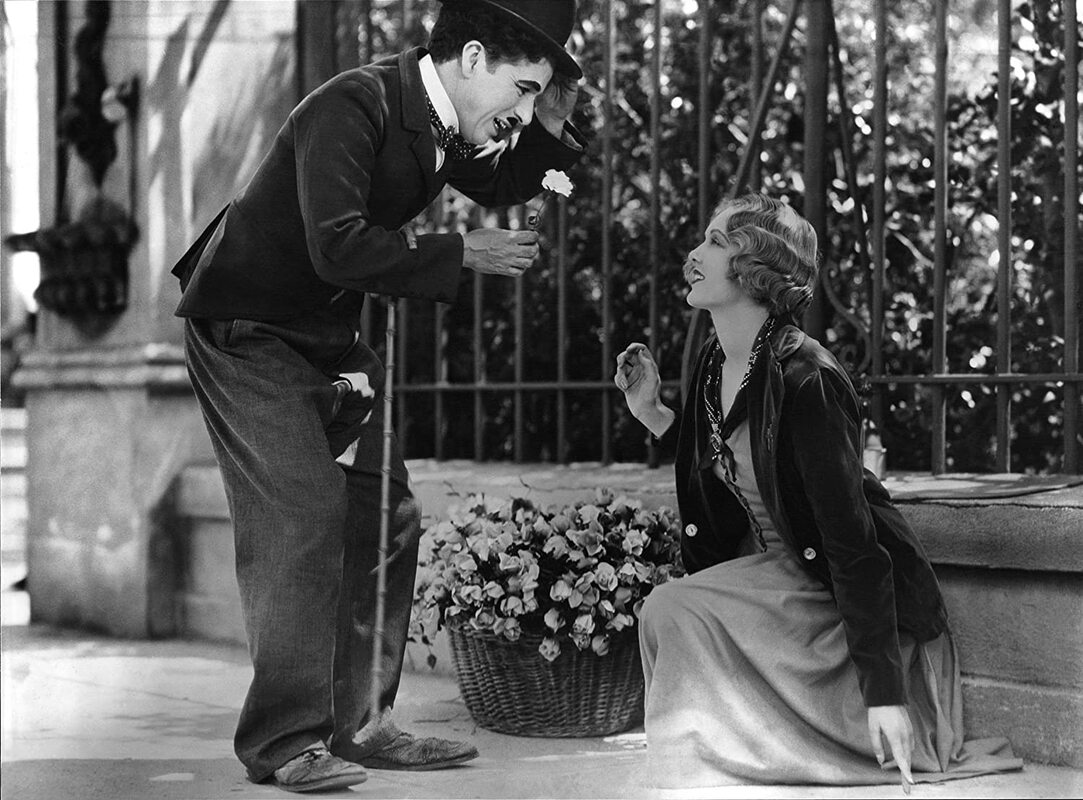
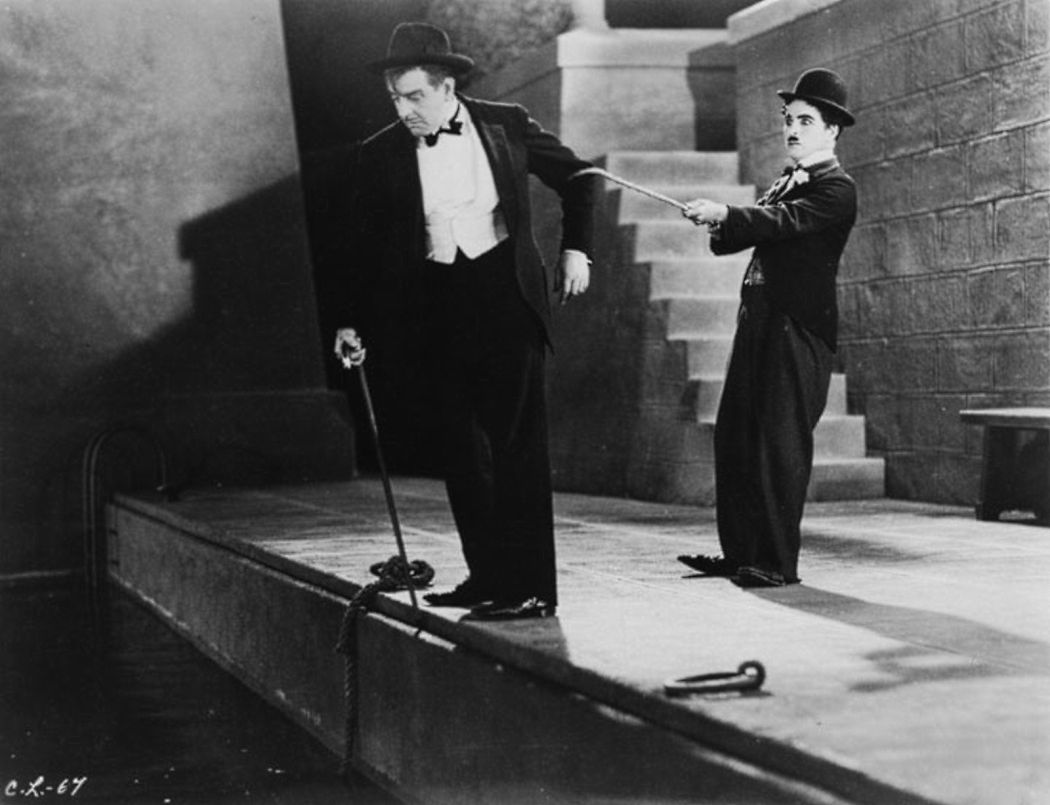
Film- City Lights (1931, Charlie Chaplin)

Picture
During the silent era, comedy was one of, if not the, most popular and critically acclaimed film genres. Criticism of silent comedy remained consistent into the post-sound era, reaching its best clarity in the late 1960s and early 1970s. The art of pantomime—the communication of thoughts and emotions solely through the use of gestures and facial expressions—and the art of film were intertwined at this part of the century.

Although the Stock Market crash occurred in 1929, the economic situation continued to decline into 1931, the year of City Lights’ release. The character of the Tramp became even more relevant as so many of the film-going public could relate to someone down on his luck.

The first feature length, full-sound film was The Jazz Singer (Alan Crosland 1927), however throughout 1928 when Chaplin began production on City Lights, the majority of films were still silent.  By 1931, when Chaplin released City Lights, sound films had become dominant.  As a silent character, the Little Tramp was the most well-known motion picture character in the world. 

Here we see what I first discussed in an earlier post, the difference between the universal silent humor and the localized verbal humor.  If City Lights were to fail commercially and critically, it would mean a sudden fall from the top for Chaplin.

Chaplin finally compromised by using synchronous music and sound effects, but still removing any need for dialogue. Although other films at the time used the same method of music and sound effects, Chaplin’s film remains the best example of the technique.


Picture

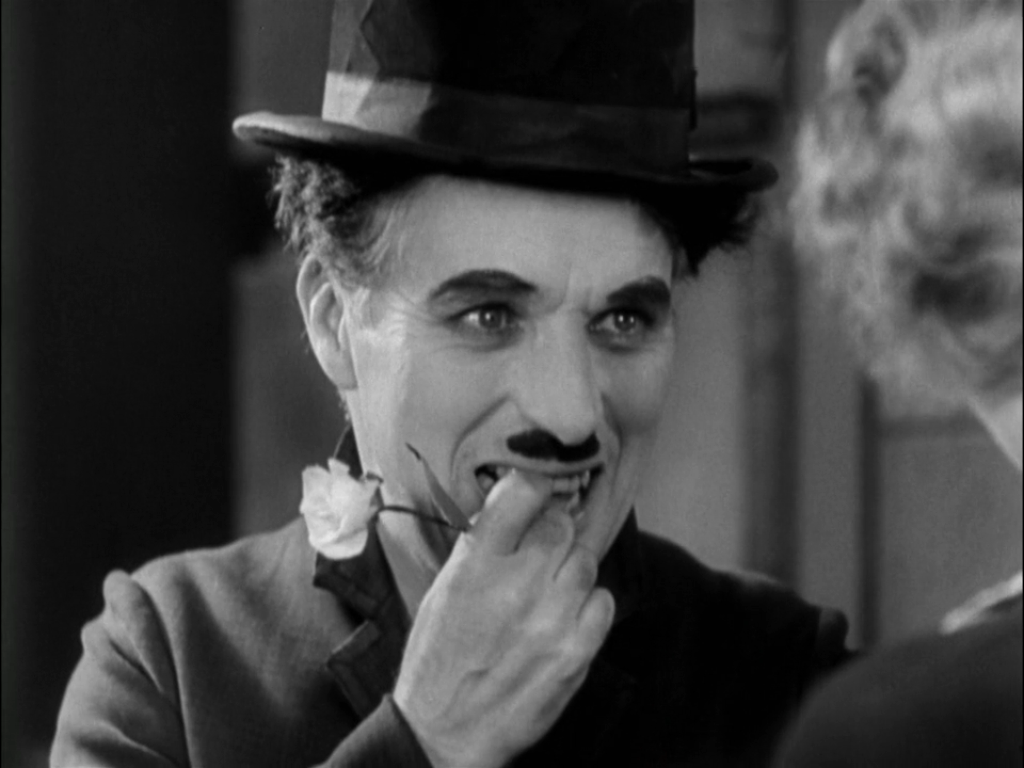
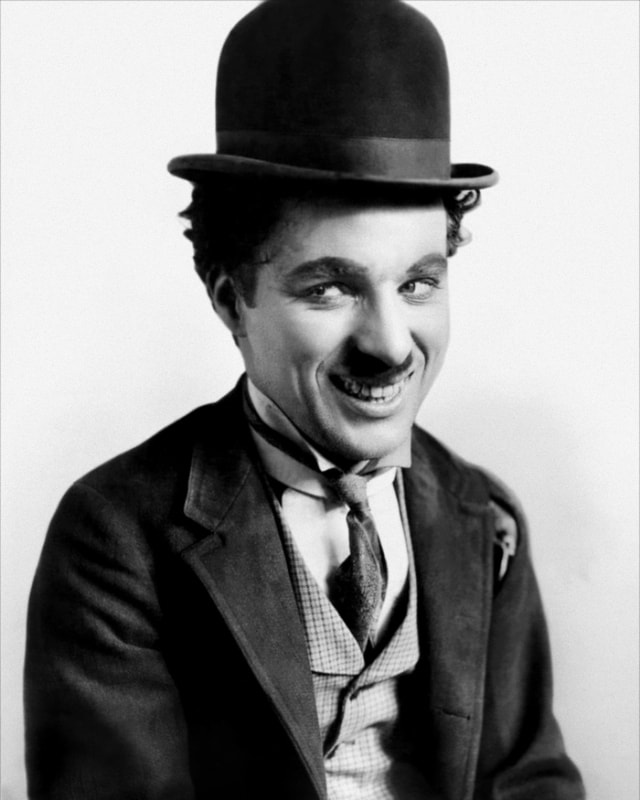
Charlie Chaplin

One cannot find a text that discusses film comedy that does not mention Charlie Chaplin (1889-1977). It is important for the reader to understand that scholars write of Chaplin as an artist, not as a comedian. Many film historians write about Chaplin as one of the great creative minds. This view of Chaplin’s artistic merit, beyond that of an entertainer, helped shape his recognition as quite possibly the first auteur in the film world.

Chaplin handled many of the filmmaking tasks of writing, directing, acting, editing, and composing. Chaplin was an auteur before the impact of the French New Wave of the 1960s popularized the use of the term in film scholarship. Through his filmmaking methods, Chaplin set the standard by which scholars judge later auteurs.


Chaplin came from a family of music hall performers, where he developed the physicality of his performances. Chaplin described the rhythm of his physical pantomime as a dance, and few performers have demonstrated such subtle control over their bodies.  As the reader will discover shortly, Chaplin understood that the internal motion within a static shot was as significant to the medium of film as was the external motion of the camera in capturing a dynamic shot.

Some film historians have criticized Chaplin for what seems to be his lack of knowledge of film conventions.   I disagree with these scholars’ assessments of Chaplin’s filmmaking knowledge.  Chaplin went against the established conventions of film presentation not because he did not understand the conventions, but because he had already mastered them and could create his own conventions.  For example, instead of following the tradition of the wide shot to establish a scene and the closeup to reveal details, Chaplin preferred wide shots for his comic sequences, while he would only use closeups in order to capture the expression on his performers’ faces in moments of sentiment.  Other scholars criticize Chaplin for what they see as a lack of editing.  However, many critics feel that his lack of cuts is a strength, not a weakness, and I agree.
Other filmmakers do not hold shots as long, simply because they cannot.  Chaplin alone has the ability as performer and filmmaker to hold the viewer’s attention without having to divert it through a change of angle.  The cuts—when he does use them—are a textbook model of invisible editing.  
Chaplin’s ability as a supreme artist rests partly on the fact that he understood not only exactly what to show the viewer, but also how to show it to the viewer in a way that made the technique unobtrusive. Of all the comic filmmakers and performers, no artist has ever been better at juxtaposing comedy and tragedy without detracting from either. At the end of City Lights, we have experienced an incredible emotional and aesthetic experience, but we do not feel cheated out of a good laugh.


Picture

Production

As I stated above, Chaplin was the biggest movie star in the world as he began work on City Lights. With his previous succession of films, his audience had high expectations for Chaplin’s next work, and he was not one to disappoint.  

As for the preproduction stage of City Lights, the writing process was rather brief, with the major themes already chosen, and the story developing as shooting approached.  While the narrative of City Lights was an original idea of Chaplin, many of the gags came from earlier sources, including Chaplin shorts.  The greatest of artists, Chaplin included, always have the risk of duplicating previous work. As I noted in a previous post, the same gag can successfully return again and again as long as it is still able to elicit laughter.

 Influencing later filmmakers like Alfred Hitchcock and David Lean, Chaplin had a hand in virtually every aspect of production.  Everything that Chaplin did involved thorough preparation and practice.  When it came to scoring the film, Chaplin had to rely on the assistance and experience of orchestrator Arthur Johnson. While Chaplin may have lacked the knowledge to notate music, he certainly understood how it should function within the film medium.


Picture

Reception and Legacy

Without Chaplin’s skill and reputation, a silent film during the sound error would not have succeeded. The critics of nearly every major publication in the United States agreed that City Lights was a triumph.  Mordaunt Hall of the New York Times said that “It is a film worked out with admirable artistry, and while Chaplin stoops to conquer, as he has invariably done, he achieves success”.  Box Office Magazine called it Chaplin’s “finest comedy” and praised its story as well as the performances of its cast.  Sid Silverman of Variety felt that it was a good film but “not Chaplin’s best picture, because the comedian has sacrificed speed to pathos” and had some doubts as to its “holdover power”, wondering if its initial success was “novelty money”.  In 1931, The National Board of Review named it one of the Top Ten Films of the year, adding that it is “a challenge to the talkies, a crucial event in cinema history” but “not Chaplin’s best but far ahead of any other funny man’s best”.  Time Magazine predicted “he, whose posterior would probably be recognized by more people throughout the world than would recognize any other man’s face, will be doing business after talkies have been traded in for television”.  Notice how each one of these critics speak of the film in terms of Chaplin, and do not address the themes that he explores.  They describe the “novelty” of the film and its silent qualities of gesture and expression.  The reviewers that criticize it, do so because of the relationship of comedy and pathos within the film.

As for the international critical reaction, Siegfried Kracauer of the Frankfurter Zeitung said that “In it Chaplin demonstrates again his mastery of the language of gesture, a mastery that reduces the spoken word to shame”, however he added “It’s not difficult to find weaknesses in the film” referring to a plot that he felt was not as strong as earlier Chaplin pictures.  Note how he echoes the above reviewers’ praises of the silent performance techniques of gesture.  Also, consider how Kracauer criticizes what he claims is a lack of plot—showing that Kracauer does not completely understand comedy’s necessary balance of narrative and gag.  E.A. Corbett of the Edmonton Journal concluded that “no one else in the world can take the same outline and make it compete successfully with the talkies, because no one else can so fully occupy that delicious, illogical, unreal world which Chaplin’s genius has created for himself alone,” approaching the film in terms of Chaplin.  Surprisingly, City Lights did not receive any Academy Award nomination, which seems inconceivable considering its reputation today.  Tim Dirks, of the American Movie Classics Filmsite attributed the lack of nominations, “to the pro-talking film Academy members, it must have appeared to be reversing the trend toward talkies that advanced sound films”, which would make sense.  The contemporary film industry leaders’ advocacy for the “progress” of sound in 1931, has a parallel with today’s film industry leaders, who seem to favor many pictures because of the perceived revolutionary visual effects that they contain.
 
I have been unable to find any explanation for why Chaplin chose to rerelease the film.  I speculate that perhaps newly-formed television networks had begun to program some of Chaplin’s shorts, and this could have brought an audience demand for Chaplin features.  Also, his most recent release, Monsieur Verdoux (1947), did not fare well with audiences and reviewers (TCM), perhaps prompting Chaplin to rerelease an earlier, more successful work in order to regain his reputation.  

In addition to film scholars and critics, many filmmakers have cited City Lights as an inspiration.  Both Stanley Kubrick (in 1963, Cinema Magazine) and Russian filmmaker Andrei Tarkovsky (in 1972, Life Magazine) have called it one of their favorite pictures.  Chicago Sun-Times film critic Roger Ebert has reviewed the film twice; reviewing it for a second time 35 years after the first review.  In 1972, he said, “Chaplin’s films age so well, I think, because his situations grow out of basic human hungers such as lust, greed, avarice”.  The reader will learn that this is true of many such film classics.  Ebert appears to be the first reviewer who talks about the deeper themes beneath the surface of City Lights—perhaps themes reviewers forty years earlier did not want to acknowledge.
    Of the seventeen reviews written in the Twenty First century that I have compiled, only one critic, Alan Vanneman of the Bright Lights Film Journal gave it a less than favorable review, citing the “remarkably unfunny beginning”, the “numerous detours” in the plot, and how “Chaplin leaves entirely unresolved how Cherrill will treat the Tramp now that she knows who he is”.  Looking at Vanneman’s review, we can infer that his expectations for a comedy were misaligned.  The “numerous detours” (gags) and the lack of resolution at the end of the narrative are perfectly acceptable for comedy—in fact, sometimes a lack of resolution is an even more fitting ending for a comedy than the typical deus ex machina found in so many dramas.  

The remaining sixteen critics praised the film, as dozens of critics had done when it premiered.  Four of the reviewers, Collin Souter of eFilmcritic.com, Jules Dassin of The Telegraph, Wes D. Gehring of USA Today, and John Nesbit of Old School Reviews particularly praised the final scene—a scene of pathos and not humor.  Several reviewers focused on the historical importance that it is one of the last silent films, and on Chaplin as an artist.  Dan Mancini of DVD Verdict called it “Chaplin at his best…. his last—and arguably finest—silent feature”.   Filmmaker Peter Bogdanovich explained, “Below the surface of City Lights, there is an ache of nostalgia for the lost Eden of the silents that is still palpable today”.  James Berardinelli of Reelviews called it “the quintessential silent film”, adding that “sound would have ruined it”.  Jay Antani of CinemaWriter.com added, “City Lights is a great gift to all of us by a filmmaker at a latter-day peak of his genius. To see anything by Chaplin is to nourish the soul. Chaplin is good for the world”.  Other critics attempt to analyze the deeper meanings behind the narrative and gags of the film.  Following Ebert’s example, Dan Jardine of Cinemania noted its “universal themes, such as the intoxicating blindness of love and the rejuvenating power of selflessness”, speaking of the themes that contemporary reviewers did not address.  
    Many scholars have provided varying analyses of the film over the years.  Charles Silver of the Museum of Modern Art calls it “Chaplin’s most perfectly accomplished and balanced work”, focusing on the combination of comedy and drama in one film.   Chaplin scholar Dan Kamin, on the other hand does criticize it on a structural level, “City Lights may have the best plot, and it certainly packs the biggest emotional wallop, but its comic routines are inconsistent in quality”.  The foci of both scholars show opposite ends of the same critical difficulty in approaching comedy.  Silver seems to appreciate it for its moments of sentiment, while Kamin seems to grade the value of a comedy by how funny he finds the gags.  They insist on comparing a comedy film to something that is not—for Silver, a non-comic film and for Kamin, a comic Vaudeville routine.

In 1952, critics at the British Film Institute voted it the second greatest film of all time, behind De Sica’s Bicycle Thieves (BFI)—juxtaposing it with one of the quintessential film tragedies (especially during the European recovery from World War II when the BFI vote occurred).  In 2002, critics at the British Film Institute voted it one of the greatest films of all time (BFI).  In 2008, The American Film Institute declared it the greatest romantic comedy of all time (AFI).
In the 1970s, critics began to rethink their opinions on Chaplin, especially since more attention turned to Buster Keaton.  I highly recommend City Lights and think you will find it very approachable despite it being 90 years old.


0 Comments

1/18/2021 0 Comments

Music- What Are Clefs?

Picture
If you remember from an earlier post about how to read pitch and rhythm, when the notes move up the page, the pitch gets higher and the letter names go in alphabetical order (A, B, C, D, E, F, G). When the notes move down the page, the pitch gets lower and the letter names go in reverse alphabetical order (G, F, E, D, C, B, A).

If you remember, no matter the letter name of the first note, the names of the lines and spaces are constant; they do not change, but what tells us that the lowest line is always E and the top line is always F is the clef symbol.

Picture
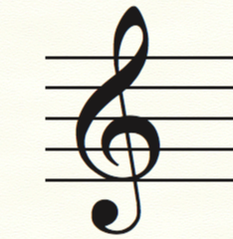
The most common clef symbol is the treble clef. It is also called the G clef because the line inside the circle part of the symbol is the note G. This clef works best for higher notes. This is the clef read by the right hand of keyboard players, flute, clarinet, oboe, saxophone, trumpet, horn, violin, guitar, xylophone, glockenspiel, and many other higher pitched instruments. When you see this treble clef symbol, the bottom line is always E and the top line is always F. That’s why it is important to check the symbol, but once you do, you know the names of the lines and spaces will not change.
Picture
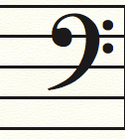
The next most common clef is the bass clef. This clef is also called the F clef because the name of the line between the two dots is F. For bass clef, the name of the lowest line is G and the highest line is A. But the notes going up the page still move in alphabetical order and notes going down move in reverse alphabetical order. As long as there is a bass clef at the beginning of the piece, the names of the lines and spaces stay the same. 

The lowest instruments read bass clef including bassoon, bass clarinet, trombone, tuba, cello, bass, and timpani. Other instruments go across treble and bass clefs depending on the range of the instrument they are playing. These include many keyboard instruments like piano, organ, harpsichord, and pitched percussion like marimba.

Picture
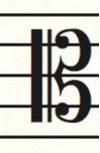
Beyond the two most common clefs, we have the movable C clef. The name comes from the fact that the arrow looking part indicates that line is C. When the middle line is C, it is called the alto clef. This is what viola players read exclusively. Same idea- letters move up alphabetically and down in reverse alphabetically.
Picture
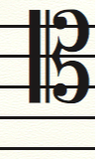
If the C clef moves up so that the second line down is C, it is now the Tenor clef. But you guessed it, once you know where C is, the notes move up alphabetically and down reverse alphabetically. I am not aware of any instrument that only reads tenor clef, but if playing for prolonged periods in the upper range cello, bassoon, and trombone will use tenor clef.

The best way to get used to reading in different clefs is just repetition. I recommend getting confident with treble and bass clefs before you explore alto clef, unless you play viola.

The reason that we use different clefs is so that instruments of different pitch ranges can most often play notes that fit within the staff and are not always playing notes above or below the staff. It would be difficult for a trombone or an instrument in a similar range to read notes that were all below the treble clef, they would go so far below the staff that they would really not be readable, not to mention that they would be printed over the next staff down on the page.

All of this may seem complicated, but be thankful that each instrument doesn’t have it’s own clef!


0 Comments

1/11/2021 0 Comments

Film- Pre-Production, Production, and Post-Production

Picture
There are three main phases to filmmaking (pre-production, production, and post-production), a fourth could be distribution at the end if you consider that separate from post-production. 

Pre-Production

Pre-production is everything that happens before the cameras start recording. For a large studio, it would begin with a story pitch or a script submission from a writer. For a small, independent filmmaker, this phase begins with an idea for a story. Don’t get carried away too soon. An idea is exciting. Flesh it out into a two or three page draft and see if the story is workable. Next, you will want to check your idea against what already exists. You don’t want to write an entire screenplay and then realize that you had actually seen it before and it’s The Godfather.


If you remember anything from this article, let it be this: the more work and preparation you can do during pre-production, the less work you will have to do during production and post-production.

As you work on the story, start by thinking of the biggest ideas before moving to the smaller ideas. Think of the general 5 act structure- introduction, action begins, complications, climax, and aftermath. In the first draft, you can write anything and do not worry about limitations. Do not worry about character names or dialogue. If the general structure of the story does not work, you will be wasting your time writing dialogue. Take it one step at a time.

One tendency that many writers seem to have is if the basic skeleton isn’t good, that adding more and more scenes will fix it. This is not a good solution. Instead of a small mess, you end up with a bloated mess. I’m saying this from experience. If a scene is not working, it is better to cut that scene than to try to write three more scenes to make up for the bad scene. The quality over quantity rule is true.

You will know the story itself is solid when every part is absolutely necessary and complements every other part. Necessary meaning that each part forwards the plot and builds the characters. If a scene or a sequence does not forward the plot or develop characters, it is probably safe to cut it.

When writing a screenplay, take it one step at a time. Do not worry about set design, camera angles or other details until the story and characters are solid. Those details can be added once you have everything else exactly the way it needs to be. 

Do not be afraid to have trusted mentors and other filmmakers critique your script. I know there is a fear that someone will steal your ideas, but then they aren’t really a friend if that happens. If you get too close to your own work, it is hard to step back and honestly evaluate something. Someone else can help you if the story is not clear (remember they cannot read the character’s thoughts as you, the creator, can). If it is not clear to someone critiquing the script, it will not be clear to the viewer once filmed.

In terms of technical difficulty, do not be afraid of the reach of your story. Complex set pieces or situations can sometimes be solved simply. A planet with 6 months of total darkness just needs to be filmed at night. A story taking place in an 84 story building just needs a still image establishing shot before interior scenes.

Once, and only when, the script is complete, there are many other aspects to the pre-production phase. Some go in order and others can be happening simultaneously (depending on the size of your crew). Ordered events would include storyboarding the shots (there is now software to assist with this if you are not confident with your drawing ability or have a friend willing to draw), blocking out camera and light positions, character positions, etc.

Other items that could be happening at various times is auditioning actors, location scouting (including asking business and property owners' permission to film at their location), designing and building sets, collecting props, designing and making costumes, designing makeup and hair (actors would probably need to be chosen first), being sure you have the lighting, camera, and sound equipment that you need, and other details.

Picture

Production

Again, everything must be planned before this phase begins.

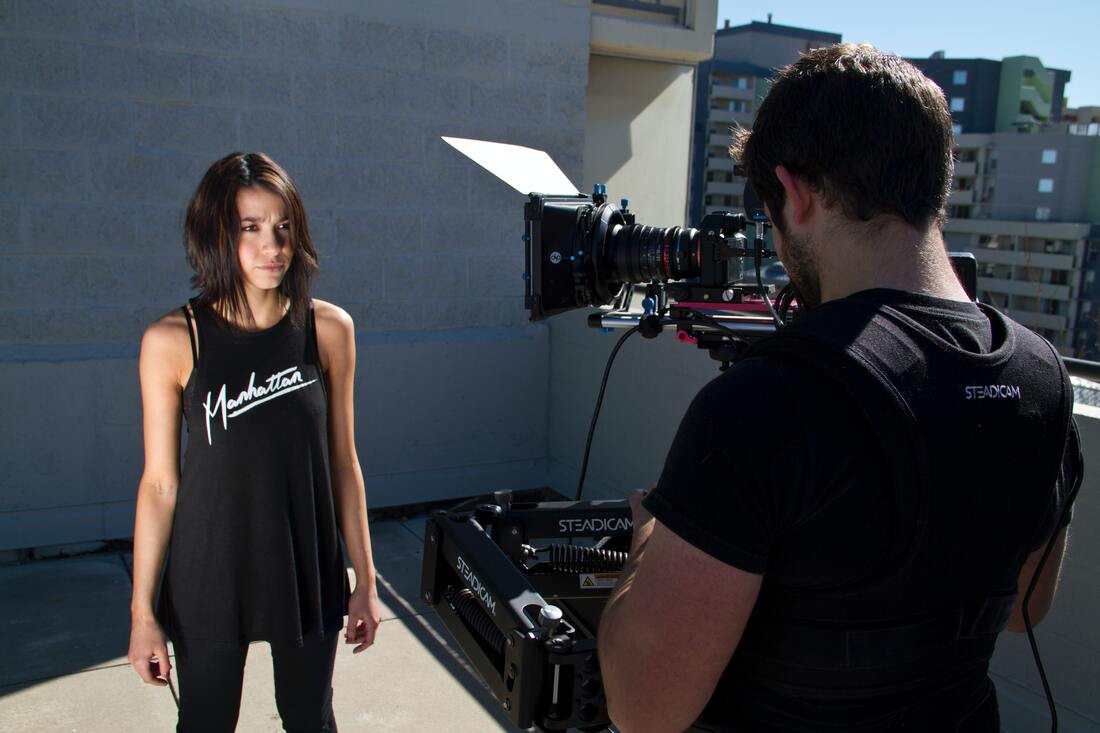
Out of the three phases, production is the phase that you do not want to waste any time. If you are renting space or equipment, you may be charged by the day. Members of the crew and performers could be paid by the day (or hour). 

As the person in charge (we are assuming for this article), have everything that can be set up ready the night before the shoot if you have access to the set then. If not, get to the set as early as possible and schedule at least 1 hour for yourself to be there before any crew and at least 2 hours before any performers would arrive. This time will pay off later.

Be sure that your crew knows exactly how to do each task that is required of them before it needs to be done. You don’t want to have to do everything yourself. A little bit of training for a crewmember makes your life easier.

Murphy’s Law tells us that you have to plan for the worst to happen. This is when creativity and true artistry can be expressed. If you had planned on a three camera setup and one camera malfunctions, you need to be able to decide in the moment how to compensate. With enough experience, you will be able to see the potential finished shots in your head and adjust accordingly. Trust your instincts and trust your crew. It will take less time to review your takes after an entire scene than to wait and check each shot one at a time. 

Patience, kindness, and professionalism are key qualities during production. You may be hot, tired, and hungry the entire time, but you continue to smile and encourage everyone else. Hold people accountable for their specific tasks but do not get upset with someone when in a situation that is outside of their control, it will not help move things along.

When you predict how long it will take to shoot what you need at a given location, always add an hour to that. If you think you can film all the office building scenes in 8 hours, schedule for 9 just so people are not ticked off when they have to stay later. Psychologically, it is a much better feeling to finish something before schedule than having to stay late.

This tip sounds silly, but be sure you capture everything you possibly need at a location or with a specific performer before you leave that location or tell a performer that they are all set. It’s a pain in the butt to realize when editing that you are missing a key piece of dialogue.

Do everything you can to capture good sound while you are at the location, including room tone for the dead space between dialogue. Dubbing in post-production is always an option, but if it is not needed, that is terrific too.

Picture

Post-Production

A lot of people may tell you that this is when the film is really made. If you are not a confident and experienced editor yourself, find someone whose style you like and who you can trust to deliver a product on a timetable. There are pros and cons to editing yourself or having an outside editor. You probably have an idea of how the film should flow if you wrote the script, but you may become so attached to one shot, that you are not willing to sacrifice it for the good of the overall project.

Editing is much more than cutting out the bad parts and squishing the good parts together. Depending on how much camera coverage you had during production, there can be almost limitless choices available when working on each scene. You may even edit the same scene two different ways and have a small test audience tell you which is more effective.

Just like writing the script, editing can be done from big idea to small detail. Get the shots in a logical order for each scene, connect scenes together into a sequence, and finally an overall flow for the entire film. Always use the most capable computer that you have for editing, but even with that, I recommend creating a separate project for each sequence while at this first-cut stage. Even the best computers and graphic processors can get bogged down when trying to store an entire movie in one project if you are just working on a 10 minute chunk.

Many beginners with computer editing see all the different options for transition effects and think they have to use at least one per scene. The big idea with a transition is it should not be noticeable. There are all kinds of wipes, dissolves, swirling waves, etc. but if you are not careful they will scream “THIS IS A TRANSITION”. Direct cuts to new establishing shots are the most common transition in both films and television and can work very well when you know how to use them. 

Do not do anything in terms of sound effects, music, or visual effects, until you have the first draft cut of the edit ready. You do not want to waste a composer’s time (and your money) writing music to line up with a scene that is later cut or trimmed. Just like the script, the edit must be really solid before you move on to the next step. 

I recommend getting your composer on board at the beginning of post production so they know the overall feel of the film, but do not have them start to write specific cues until you have the rest of the sound mix (dialogue, specific effects, foley, and ambience) ready. You may find that music is not needed in a specific sequence if the sound is telling the story on its own. If you do not have a separate sound editor, you may want to ask others to critique your use of sound. You may be so excited that you found just the right sound for a shot only for someone else to admit that no one chewing would ever be that loud. Foley is sound that is recorded to match specific actions. The ambient sounds may be the most important for realism. Nothing reminds the viewer “THIS IS FAKE” until the sound completely cuts out in between lines of dialogue. Environmental sounds and room tone always continue even when they are barely perceptible.

If you have someone else working on the visual effects, they can begin once you are sure that every effect requested is absolutely necessary. Even if you are doing the effects yourself, do not waste your time working on shots that may not be necessary to the plot or able to be rendered believable.

The music may be the last stage of post-production. Be really careful to select someone that understands what kind of sound you desire. A neo-noir detective story may sound really stupid if you hire someone that specializes in bluegrass music. Your medieval epic may not work if you have a jazz pianist recording the soundtrack. Great filmmakers know when to use music and how to use music. There are many great texts and articles on film music and I suggest you pursue them before this stage of the film.


If any of this article sticks with you, please let it be to finish the script before you do anything else. You don’t want to spend 13 years working on the same film like I did :)

Picture
0 Comments

1/4/2021 0 Comments

Music- The Pros and Cons of Written Notation

Picture
“Standard” music notation, as we know it today, arrived at its current form, more or less, during Bach’s lifetime (early 1700s). One big reason for this was that before the 1700s, keyboard instruments were not tuned in even or equal temperament meaning that not all half steps sounded the same. Before this, the difference between C and C# did not sound the same as the difference between F and F#.

Once keyboards were tuned so that every half step was equal, a player could play a piece in any key and the scale degrees in relation to each other would be the same. This means that music could be transposed, or moved up and down to different keys in order to better accommodate a singer’s or instrument’s range. 

Soon after, we see horns that have valves and woodwinds with more keys to be able to play chromatically, or by half steps in every key.

Our symbols of music notation tell us the pitch of each note (the letter name), the length of each note (which we call rhythm), changes in dynamics over time, how notes should be “attacked” with articulations, and the key of the music (flats and sharps that result from the starting note of the scale). 

For other information we rely on numbers (time signature), letters (dynamics for sections, chords) or a combination of words and numbers (expression descriptions, tempo, etc). 

Without understanding the system, someone familiar with the style of music being written would be able to see the basic beat structure in each measure and whether the notes are moving higher or lower, regardless of knowing the letter names or specifically what the rhythmic symbols mean.

Notice how a knowledge of what sound the symbols represent is a prerequisite. Without knowing the sound, the symbols are meaningless. It’s like trying to understand symbols that represent a forgotten language, if you are not sure how the spoken language sounded, the symbols would not help.


Picture
Try singing this song!
Immediately, one can see how written notation can be a barrier to someone who never learned to read it. 

Even with knowing the definition of each symbol, the style of the music will change it. For example, eighth notes in jazz may be written as eighth notes, but intended to be played as a “long-short” swing pattern. Knowing how the eighth notes should sound in other styles would not help unless the reader were familiar with the style of jazz.

Another rule-breaker is the entire concept of rubato, very common in many styles since the 19th century. Rubato describes the subtle slowing and quickening of the tempo regardless of what the overall pulse of the piece is. Often this is indicated with the word rubato and not any change in the symbols used.

Another shortfall of our notation system is it really only works for Western music. If, like me, you have ever tried to transcribe a traditional Indian piece, you will soon notice that their rhythms and pitches do not fit into our symbols, or rather, our notation system was not made for Indian music. Traditional Indian scales use quarter steps (between the space of two half steps). Western listeners have a very difficult time identifying these and not hearing them as wrong notes. The Indian rhythmic system is actually based on ragas. A piece may use Raga A, Raga C, and Raga M (I made up these labels). In other words, each rhythm pattern is a different idea, not made of smaller divisions or larger combinations of the beat.

Many traditional styles of African music are very difficult to reproduce rhythmically in Western notation. The issue one runs into is the Western idea of a time signature. When music is more or less steady, it helps to have beats grouped by measures with time signatures. Of course, later Western classical music did use changing meters or changing time signatures, but it still does not capture the pulse of multilayered rhythms that we find in many African styles. 

Just like any language, written notation has its shortcomings. As musicians, we need to remember that written notation is a tool--a wonderful tool that can open many doors to explore other styles of music, but the symbols on the page are not music in themselves. The music comes from a person interpreting those symbols.

When I introduce composition to my youngest students, I do not require them to write in standard notation. Some of them choose to follow it fairly closely, others create their own, equally valid, system, and others use a hybrid of familiar notes and their own way of interpreting them. 

The only requirement I use is that the student should be able to explain their system and teach it to a classmate. I even had a student once write rhythms for bongos. Not only did the student have a way to know the pattern he was playing but also a way to identify which bongo he was playing, something that is more difficult in standard notation unless the first measure has high bongo and low bongo labelled using text.

I write this article simply to encourage us to reconsider what many of us grow up learning may not be the only legitimate way to record sound on paper. We also must reconsider that reading standard notation may not be the only correct way to learn and to understand music.

In many music schools, students are not accepted into the program if they cannot read standard Western notation. Once I completed music school and began to make music with musicians that learned in ways other than myself, I had the privilege to make music with many people that learn music by ear. 


Picture
Two ways to notate the same music.
Learning music by ear is not a deficiency as many would lead students to believe. Music is an aural art form and I have found that those that rely more on their ear than their eye can often respond and react more quickly. 

Musicians that do not read standard Western notation are not musically illiterate. They may in fact be reading something, just written a different way. There have been many very successful musicians that solely read chord symbols. If you are not familiar with chord symbols- with just a couple of letters or note names, the experienced player knows which notes to play and based on the alignment of the chord symbols over the lyrics, when to change chords. By only showing the changes, this can often give players much input for the rhythm of the chord repetitions between changes. Although the letter system of chords comes from Jazz. Even in the 1600s-1700s, there was a system of chord shorthand known as figured bass. The bassline would be written out in standard notation and the harmonies would be implied by the figured bass symbols.

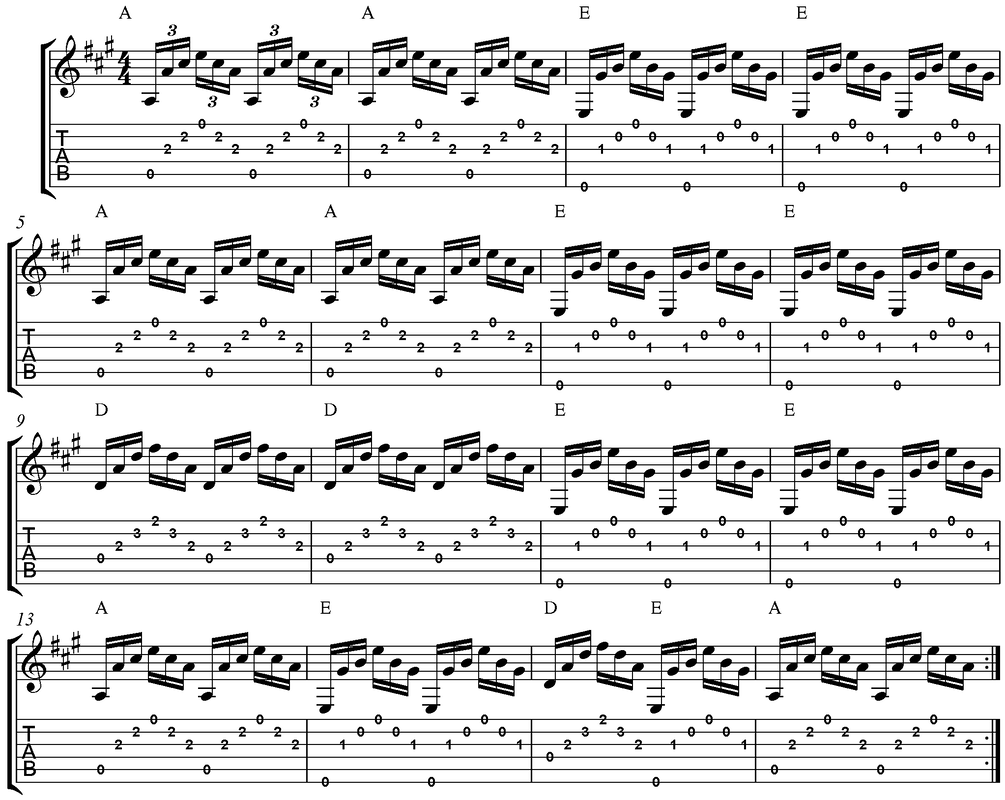
Other forms of notation work especially well for string instruments like bass, guitar, and ukulele. Fretboard diagrams show the player where to put their fingers on the strings and sometimes even number the dots to show which finger to use. Similar to this, tablature shows the strings of the instrument themselves and which fret of the instrument (no fingers down would be 0) to press on that string. Fretboards and tablature are most helpful when the player already has an idea of the beat or rhythm of the piece.

As you can see, standard Western notation has been well developed for very specific instructions and helps musicians to share ideas without hearing something first, but it is not the only way to write and to share musical ideas. If we can expand our thinking on how we share music, we open the experience of playing and creating music to more people. Please share your thoughts in the comments.

0 Comments

    Michael Arell Blog: Teaching, Music, and Movies


    [email protected]

Powered by Create your own unique website with customizable templates.